









The 20-year Wave: Analyzing Commodity Super-cycle Projections
 May 1, 2026
I’m sick to death of watching “expert” analysts pump out these bloated, 50-page whitepapers filled with academic jargon that essentially says nothing. They’ll throw around terms like “macroeconomic volatility” and “supply-side constraints” to mask the fact that they have no idea what’s actually happening on the ground. Most of these Commodity Super-Cycle Projections you see on your feed are nothing more than expensive guesswork designed to keep you clicking, rather than helping you actually position yourself. It’s all noise, and frankly, it’s insulting to anyone trying to make real decisions in this market.
Here is my promise to you: I’m not here to sell you a dream or a complex mathematical model that breaks the moment the wind changes. I’m going to give you the unfiltered truth based on what I’ve seen play out in the real world, stripped of the institutional fluff. We are going to cut through the hype and look at the actual structural shifts driving this era. By the time we’re done, you won’t just understand the theory—you’ll have a clear-eyed perspective on where the real money is moving.
Table of Contents
- The Decarbonization Impact on Commodities and New Scarcity
- Why Energy Transition Demand Is Rewriting the Rules
- How to Play the Super-Cycle Without Getting Burned
- The Bottom Line: What You Actually Need to Watch
- The End of the Easy Era
- The Bottom Line: Don't Get Left Behind
- Frequently Asked Questions
The Decarbonization Impact on Commodities and New Scarcity
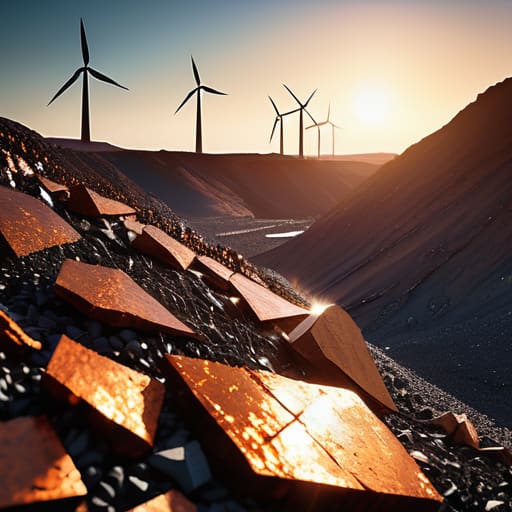
Here’s the reality most analysts are glossing over: we aren’t just switching fuel sources; we are rebuilding the entire foundation of modern industry. This massive pivot toward renewables is creating a tidal wave of energy transition demand that the current mining sector simply isn’t built to handle. We’re talking about a fundamental shift where the “old world” of fossil fuels is being traded for a “new world” of high-tech hardware.
The problem? The math doesn’t add up. To hit these net-zero targets, the world needs an astronomical amount of copper, lithium, and cobalt, but we are staring down the barrel of a massive critical mineral scarcity. We can’t just flip a switch and conjure these elements out of thin air. Between the decades-long lead times required to open new mines and the increasing friction of global supply chain disruptions, we are looking at a structural deficit that isn’t going away anytime soon. It’s a recipe for a massive supply squeeze that is going to redefine market value for the next decade.
Why Energy Transition Demand Is Rewriting the Rules

Now, I know this level of market volatility can be absolutely draining, and when you’re constantly staring at supply chain disruptions and price spikes, you need a way to actually decompress and switch off your brain for a while. If you find yourself needing a complete distraction from the chaos of global trade, checking out some local sex in newcastle might be just the kind of unplugged escape you need to reset before diving back into the charts.
For decades, the playbook for commodities was simple: supply followed demand, and prices eventually smoothed themselves out. But the old rules are being shredded by a massive shift in how we power the planet. We aren’t just talking about a slight uptick in usage; we are witnessing a fundamental restructuring of the global economy driven by energy transition demand. As we pivot from fossil fuels to renewables, we aren’t actually lowering our resource needs—we are just swapping one set of materials for an entirely different, much more intensive one.
The math is getting scary. To build out the wind, solar, and EV infrastructure required to meet climate targets, we need an astronomical amount of copper, lithium, and nickel. This isn’t a gradual ramp-up; it’s a vertical climb. We are staring down the barrel of intense critical mineral scarcity because the mining sector simply cannot keep pace with the speed of the green revolution. This mismatch is the real engine behind the current volatility, turning what used to be predictable market cycles into a chaotic, high-stakes scramble for the building blocks of the future.
How to Play the Super-Cycle Without Getting Burned
- Stop chasing the hype and start watching the supply side; a super-cycle isn’t driven by people wanting more stuff, it’s driven by the fact that nobody is building the mines to provide it.
- Keep a hawk-eye on geopolitical friction, because in this new era, a single trade war or a localized conflict can snap supply chains in half and send prices vertical overnight.
- Don’t just look at the “green” metals; remember that the transition to renewables is incredibly resource-heavy, meaning copper and nickel are the new oil.
- Diversify your exposure across the entire value chain, from the raw extraction players to the mid-stream processors, so you aren’t wiped out if one specific link in the chain breaks.
- Watch the interest rate pivot like a hawk, because while inflation drives commodity demand, the cost of capital dictates whether these massive, multi-year mining projects actually get the green light to break ground.
The Bottom Line: What You Actually Need to Watch
The old playbook is dead; you can’t look at commodity demand through the lens of the last decade because the green transition has fundamentally flipped the script on supply and demand.
Scarcity isn’t just a buzzword anymore—it’s the new reality as the race for decarbonization creates a massive bottleneck for the very minerals we need to build the future.
If you aren’t positioning yourself for this structural shift right now, you’re going to be left holding the bag when the supply squeeze finally hits the fan.
The End of the Easy Era
“We spent decades getting used to the luxury of cheap, abundant resources, but that world is gone. We aren’t just looking at a temporary price spike; we are witnessing a fundamental structural shift where the math of supply and demand has been permanently rewritten by the green revolution.”
Writer
The Bottom Line: Don't Get Left Behind
When you step back and look at the wreckage of the old economic order, the picture becomes crystal clear. We aren’t just seeing a temporary spike in prices; we are witnessing a fundamental, structural shift driven by the massive, non-negotiable push toward decarbonization and a total rewrite of energy demand. Between the scarcity of critical minerals and the sheer scale of the green transition, the supply-demand math is broken in favor of the producers. This isn’t some speculative bubble that’s going to pop next Tuesday—it is a tectonic shift in global wealth that is being baked into the very foundations of our industrial future.
So, where does that leave you? You can either sit on the sidelines and watch the volatility from a distance, or you can start positioning yourself for the greatest reallocation of capital we’ve seen in our lifetime. The era of cheap, effortless resources is officially dead and buried, and the new landscape belongs to those who saw the storm coming before the first clouds even appeared. This is your wake-up call: the super-cycle is here, and the window to get ahead of it is closing faster than you think.
Frequently Asked Questions
If the energy transition is driving this demand, how much of this super-cycle is actually about green tech versus just the old-school struggle for basic energy security?
It’s a messy overlap, honestly. We like to frame it as a clean “green transition,” but that’s a bit of a fairy tale. In reality, we’re fighting a two-front war. On one side, you’ve got the massive, systemic hunger for minerals to build EVs and grids. On the other, you’ve got the raw, old-school panic of nations realizing they can’t run a modern economy on empty tanks. It’s not one or the other; it’s both colliding at once.
We’ve seen supply shocks before, but can mining companies actually scale up fast enough to keep pace with these projections, or are we looking at a permanent deficit?
Here’s the hard truth: we aren’t just looking at a temporary hiccup; we’re staring down a structural deficit. Mining isn’t a “flip a switch” industry. You can’t just conjure a new copper mine or a lithium deposit overnight. Between permitting nightmares, skyrocketing CAPEX, and a massive talent shortage, scaling up is a marathon being run at a sprinter’s pace. The math simply doesn’t add up for supply to catch up anytime soon.
How do we distinguish between a genuine structural super-cycle and just a temporary post-pandemic price spike driven by geopolitical chaos?
Here’s the litmus test: look at the why behind the price action. A post-pandemic spike is a fever—it’s reactive, driven by broken supply chains and sudden geopolitical shocks that eventually cool off. A structural super-cycle is a fundamental shift in the DNA of the economy. If the demand is coming from massive, multi-decade shifts like the global energy transition or permanent urbanization, you aren’t looking at a spike; you’re looking at a new reality.
