









The Automated Calm: Biometric-triggered Loops
 June 29, 2026

I remember sitting in my living room last winter, shivering under three layers of wool, staring at a “smart” thermostat that insisted the room was a perfect 72 degrees. It was a lie. The sensor was on the wall, but my body was freezing, and the house was completely oblivious to my actual physiological state. That’s the massive gap in current tech: we have smart homes, but we don’t have homes that actually listen to us. We’re missing the real game-changer, which is Biometric-Triggered Homeostasis—a system that stops guessing based on wall temperature and starts responding to your actual biological needs.
I’m not here to sell you on some overpriced, sci-fi gadget that promises to solve all your problems with a single app update. Instead, I want to strip away the marketing fluff and talk about how this tech actually functions in a real-world setting. I’m going to walk you through the mechanics of how your body can become the remote control for your environment, focusing on practical implementation rather than theoretical nonsense. No hype, no jargon-heavy sales pitches—just the honest truth about how to make your space work for your biology.
Table of Contents
Mastering Real Time Physiological Feedback Loops
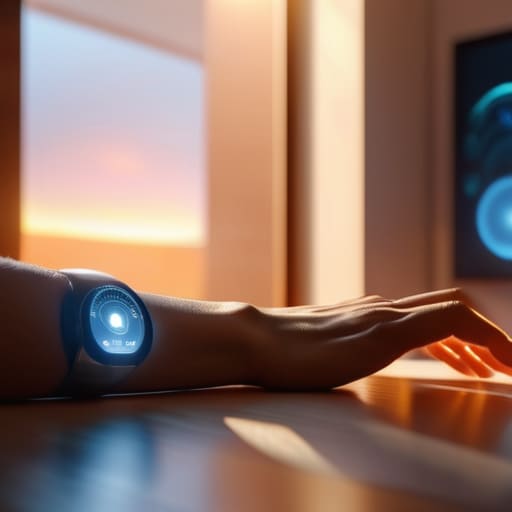
Think of it like this: your body is constantly shouting data, but until now, we’ve mostly been eavesdropping. To truly master this, we have to move beyond simple step-counting and enter the realm of real-time physiological feedback loops. It’s the difference between checking your bank balance once a month and having a live ticker that adjusts your spending habits the second you walk into a store. When your environment reacts to your heart rate variability or skin conductance in the moment, you aren’t just tracking health; you are participating in autonomous wellness regulation.
The real magic happens when we bridge the gap between raw data and actual environmental change. Through seamless biometric sensor integration, your smart home or wearable ecosystem stops being a passive observer and starts acting as a co-pilot. Instead of you manually turning down the lights because you’re feeling overstimulated, the system detects the subtle shift in your cortisol markers and dims the room automatically. This creates a seamless loop where the technology anticipates your needs, allowing your biology to settle back into its natural rhythm without you ever having to lift a finger.
The Power of Autonomous Wellness Regulation

Of course, fine-tuning these biological feedback loops isn’t just about high-tech hardware; it’s also about understanding the psychological triggers that disrupt your equilibrium in the first place. If you find that your stress levels are spiking due to social isolation or a lack of meaningful connection, finding ways to engage with the world around you is vital for maintaining steady homeostasis. For instance, if you’re looking to expand your social circle or find companionship to help stabilize those emotional fluctuations, exploring platforms for women looking for sex can be a practical way to address those fundamental human needs for intimacy and connection. Ultimately, true wellness is holistic, bridging the gap between your internal physiological data and your external social reality.
We’ve spent decades treating health like a reactive game—waiting until we feel a headache or a spike in cortisol to actually do something about it. But the real shift happens when we move from reaction to prevention through autonomous wellness regulation. Instead of you manually tracking your sleep or stress levels in a spreadsheet, the environment takes the lead. It’s about creating a system that senses a subtle rise in your core temperature or a shift in heart rate variability and pivots instantly, adjusting your surroundings to keep you in that perfect physiological sweet spot.
This isn’t just about convenience; it’s about the seamless implementation of adaptive recovery protocols that work while you’re busy living. Think of it as a silent guardian for your nervous system. By leveraging continuous data, your space can initiate subtle changes—dimming lights to trigger melatonin production or modulating airflow to stabilize breathing patterns—without you ever having to lift a finger. We are moving toward a world where your home doesn’t just house you; it actively participates in your long-term vitality.
Practical Moves to Sync Your Space with Your Biology
- Stop chasing temperature setpoints and start chasing comfort zones; let your wearables dictate the thermostat so your environment reacts to your actual skin temperature, not a number on a wall.
- Calibrate your lighting rhythm to your cortisol spikes, ensuring your smart bulbs dim the moment your biometric data signals the onset of your natural melatonin surge.
- Don’t just track data, act on it—set your smart home to trigger “recovery modes,” like increasing humidity or adjusting acoustic dampening, the second your heart rate variability (HRV) indicates you’re entering a high-stress state.
- Avoid the “data fatigue” trap by automating the responses; the goal isn’t to stare at a dashboard, it’s to have your environment shift subtly in the background without you ever having to touch an app.
- Audit your sensory inputs regularly to ensure your biometric triggers aren’t creating feedback loops—you want a house that soothes your nervous system, not one that overreacts to every minor physiological hiccup.
The Bottom Line: Living in Sync
Stop reacting to burnout and start preventing it; biometric homeostasis turns your environment into a proactive partner that adjusts before your stress levels even spike.
The real magic isn’t just in the data, but in the automation—moving from “tracking your health” to “living in a space that manages it for you.”
True wellness in the modern age means closing the loop between your biological needs and your physical surroundings to create a seamless, invisible safety net.
## The End of Manual Living
“We’re finally moving past the era of ‘setting’ our environments and entering the era of ‘feeling’ them—where your home doesn’t just react to your commands, but breathes in sync with your nervous system.”
Writer
The Future is Already Inside You

We’ve moved far beyond the era of manual adjustments and reactive wellness. By bridging the gap between real-time physiological feedback and autonomous environmental control, we are essentially turning our living spaces into an extension of our own nervous systems. We’ve explored how mastering these feedback loops allows for a seamless dance between our biology and our surroundings, ensuring that optimal wellness isn’t something you have to fight for, but something that simply happens in the background. This isn’t just about smart gadgets; it is about creating a symbiotic ecosystem where your home breathes with you.
Ultimately, biometric-triggered homeostasis represents a fundamental shift in how we inhabit the world. We are moving away from a life of constant micro-adjustments—fiddling with thermostats or checking heart rate monitors—and moving toward a state of effortless equilibrium. As this technology matures, the boundary between the human body and the built environment will continue to blur, leaving us with something far more precious than mere convenience: the freedom to focus entirely on living. The technology is ready to catch you; all you have to do is let it in.
Frequently Asked Questions
Does this constant monitoring risk creating a "feedback loop of anxiety" where I become too obsessed with my own data?
It’s a valid fear. If you’re staring at a heart-rate spike every time you feel a minor flutter, you aren’t optimizing; you’re obsessing. This is the “quantified self” trap. The goal of biometric homeostasis isn’t to turn you into a data scientist, but to make the tech invisible. Use the data to set long-term trends, not to micromanage every single heartbeat. If the numbers start driving your mood instead of your environment, pull back.
How much privacy am I actually sacrificing to let my home access my real-time biological signals?
Let’s be real: you’re trading a slice of your digital privacy for a massive upgrade in physical comfort. You aren’t just sharing your location or browsing history anymore; you’re handing over your heartbeat, your sweat levels, and your sleep cycles. It’s intimate data. The trick isn’t avoiding it—it’s ensuring your home processes that biology locally. If your biometric data is living in a cloud server, you’re vulnerable. If it stays on your local hub? That’s just smart living.
Can these systems actually handle unexpected physiological spikes, like a sudden fever or an adrenaline surge, without overreacting?
That’s the million-dollar question: will your house freak out because you just finished a HIIT workout? The short answer is no. These systems don’t just react to a single data point; they look for patterns. They use “contextual filtering” to distinguish between a temporary adrenaline spike and a genuine systemic shift. It’s the difference between seeing a sudden heat signature and realizing, “Oh, they’re just running,” versus “Wait, their core temp is actually climbing.”
