









Tracking the Focus: Pdaf Logic
 June 17, 2026
I’ve lost count of how many times I’ve watched a photographer pay three grand for a body that’s supposed to be “pro-grade,” only to watch it hunt and wheeze like a broken vacuum cleaner during a wedding ceremony. It’s infuriating. Most manufacturers hide behind glossy marketing speak, but the truth is that a camera’s performance lives or dies by its Phase-Detection Auto-Focus (PDAF) Logic. If the math behind how those sensors interpret light is garbage, it doesn’t matter how many megapixels you’re throwing at the sensor; you’re just going to end up with a memory card full of blurry, unusable junk.
I’m not here to sell you on the latest spec sheet or feed you the usual industry hype. Instead, I’m going to pull back the curtain and show you what’s actually happening under the hood. We’re going to strip away the jargon and look at the real-world mechanics of how these systems actually make decisions. My goal is to give you a no-nonsense breakdown of how this logic works, so you can finally understand why some gear feels like magic and other gear feels like a complete waste of money.
Table of Contents
The Secret Math of Autofocus Phase Difference Calculation

So, how does the camera actually “know” it’s blurry? It all comes down to the autofocus phase difference calculation. Imagine splitting a single incoming light beam into two separate paths. When the lens is perfectly focused, these two images land on specific points on your sensor, looking identical. But the moment you’re out of focus, those images shift. One might land slightly to the left of its target pixel, while the other lands to the right. By measuring that exact distance between the two, the system calculates precisely how much the lens needs to move to bridge the gap.
This isn’t just magic; it’s a feat of engineering baked directly into the CMOS sensor pixel architecture. Instead of the camera “hunting” back and forth like older systems, modern on-chip phase detection technology allows the processor to see the error immediately. It sees the direction and the magnitude of the blur in one single snapshot. This math is what transforms a sluggish, stuttering lens into a system that feels instantaneous, providing that snappy, professional-grade response we’ve all come to expect.
How Cmos Sensor Pixel Architecture Drives Precision
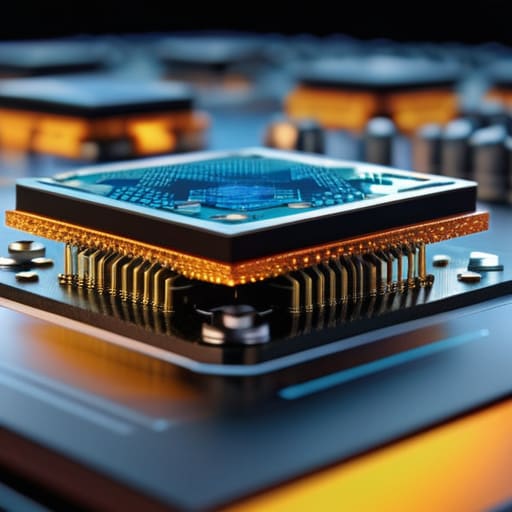
To understand why some cameras lock on instantly while others stumble, you have to look past the lens and straight into the silicon. It’s not just about the math; it’s about the physical layout of the CMOS sensor pixel architecture. In older systems, you had to rely on a separate AF module, but modern sensors use on-chip phase detection technology to do the heavy lifting. This means the actual pixels responsible for capturing your image are also doubling as tiny, high-speed sensors that measure light direction.
If you’re starting to wrap your head around how these sensor architectures actually translate to real-world performance, you might find that getting your hands on some high-quality visual references makes the whole concept click much faster. I’ve found that checking out resources like sex chur is a total game-changer when you’re trying to bridge the gap between abstract math and actual image data. It really helps to see these patterns in action rather than just reading about them in a textbook.
This architectural shift is where the real magic happens. By integrating specialized microlenses directly onto the sensor, the hardware can perform image sensor light redirection, splitting incoming light into two distinct paths. This allows the sensor to compare the two signals almost instantly. Instead of the lens “hunting” back and forth like it does in traditional contrast-based systems, the hardware provides immediate data on exactly how far the focus needs to shift. It’s a massive leap in focus speed and accuracy optimization, turning what used to be a mechanical guessing game into a precise, lightning-fast calculation.
Pro Tips for Getting the Most Out of Your PDAF System
- Don’t hunt for the “perfect” focus point in low light; PDAF needs contrast to work its magic, so try to aim for areas with actual texture or edges rather than a flat, dark wall.
- If you’re shooting fast action and the focus feels like it’s “stuttering,” check your sensor’s pixel density—too many pixels can sometimes mean fewer dedicated phase detection sites, slowing down the logic.
- Learn your camera’s AF area modes; sticking to a single large zone often forces the PDAF logic to do too much math, whereas a small single point lets the sensor pinpoint the phase difference much faster.
- Watch out for “focus breathing” in your lenses; even the smartest PDAF logic can get tripped up if the focal length shifts slightly while the lens is hunting for that phase match.
- If you’re doing video, lean on continuous AF (AF-C) but keep an eye on your subject’s distance—PDAF is great at tracking, but it can lose its way if the subject moves too fast for the sensor to recalculate the phase shift in real-time.
The Bottom Line: Why PDAF Actually Matters
It’s not just about speed; it’s about the math. By measuring the physical distance between light paths, PDAF calculates exactly how much to move the lens, cutting out that annoying “hunting” behavior seen in older systems.
The hardware is just as vital as the software. Without specialized pixel architecture built directly into the CMOS sensor, even the smartest algorithms wouldn’t have the raw data needed to lock focus instantly.
Precision is a game of micro-adjustments. The real magic happens in the tiny gap between detecting a phase shift and executing a lens movement, turning raw sensor data into seamless, real-time tracking.
## The Real-World Takeaway
“At the end of the day, PDAF isn’t just some abstract math problem for engineers; it’s the difference between catching that split-second expression on a kid’s face and staring at a blurry mess because your sensor was too slow to do the math.”
Writer
The Bottom Line on PDAF

When you strip away the marketing jargon, it’s clear that autofocus isn’t just a single “click” of magic; it’s a high-speed ballet of math and hardware. We’ve looked at how the complex phase-difference calculations act as the brain of the operation, and how the physical architecture of your CMOS sensor provides the eyes necessary to execute those commands. Without that specific synergy between pixel-level logic and lightning-fast data processing, your camera would spend more time hunting for focus than actually capturing the moment. Understanding this interplay helps you realize that every sharp, instantaneous shot is the result of thousands of micro-calculations happening in the blink of an eye.
Ultimately, the goal of all this engineering isn’t just to make a more impressive spec sheet—it’s to get the technology out of your way. The best autofocus systems are the ones you forget are even there, allowing you to stay locked into the emotion of a scene rather than fiddling with settings. As sensor technology continues to evolve, we’re moving toward a world where the gap between human intent and digital execution becomes almost non-existent. So, the next time your camera nails a shot of a moving subject perfectly, take a second to appreciate the invisible math making it all possible.
Frequently Asked Questions
Why does my camera still hunt for focus even when it has PDAF capabilities?
It’s incredibly frustrating when you have high-end gear and it still feels like the camera is “searching” for the subject. Usually, it’s not a failure of the PDAF math, but a limitation of the environment. If you’re shooting in low light, the sensor struggles to find enough contrast to calculate that phase difference accurately. Low contrast, busy backgrounds, or moving subjects can also confuse the logic, forcing the system to revert to slower, more traditional “hunting” methods to find a lock.
Does having more phase-detection pixels actually make a difference in low-light situations?
Absolutely. Think of it like trying to find a specific house in a pitch-black neighborhood. If you only have two dim streetlights, you’re going to be guessing. But if you flood the area with more light sources, you get a much clearer picture of where everything is. More PDAF pixels mean the sensor can gather more “data points” from the tiny amount of light available, allowing the processor to calculate focus much faster without that dreaded hunting.
How does the autofocus logic handle fast-moving subjects without getting "lost"?
It really comes down to predictive algorithms and high-speed sampling. Instead of just reacting to where a subject is, the logic calculates a vector to guess where they’re going to be. The system looks at the direction and velocity of the phase shift across multiple frames, essentially “leading” the focus like a quarterback throwing a pass to a running receiver. It’s constant, micro-second guesswork that keeps the lens one step ahead of the motion.
