









Exploring the Rich Flavors of Thai Green Curry
 March 5, 2026
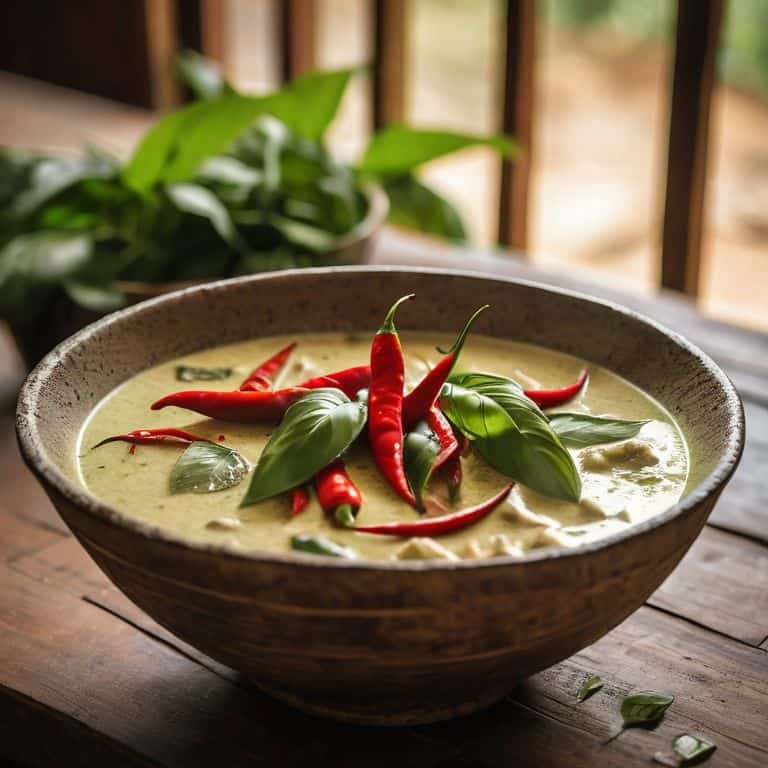
As I sat in a tiny Bangkok café, watching the chef stir a sizzling wok of Thai Green Curry, I was transported back to my nonna’s kitchen, where the scent of coconut and lemongrass mingled with the sound of lively chatter and the warmth of a lovingly cooked meal. The aroma was unmistakable, yet the flavors that danced on my palate were a world apart from the rich pasta sauces of my childhood. I’ve often found that people believe Thai Green Curry is a dish that’s difficult to master, requiring a plethora of exotic ingredients and complicated techniques. However, I’ve discovered that the truth is quite the opposite – with a few simple, high-quality ingredients and a willingness to experiment, anyone can create an authentic and delicious Thai Green Curry.
In this article, I promise to share my personal journey with Thai Green Curry, from the streets of Bangkok to my own kitchen, where I’ve perfected a recipe that honors the traditional flavors of Thailand while incorporating a touch of Italian flair. I’ll guide you through the process of selecting the finest ingredients, from the freshest lemongrass to the richest coconut milk, and provide you with practical tips on how to balance the bold flavors of this beloved dish. My goal is to empower you with the knowledge and confidence to create a Thai Green Curry that’s not only delicious but also meaningful, a true reflection of the beauty and diversity of global cuisine.
Table of Contents
Recipe Details
Ingredients
- 2 cups coconut milk (full-fat)
- 2 tablespoons vegetable oil
- 4-6 Thai green curry paste (depending on desired spice level)
- 1 onion (chopped)
- 2 cloves garlic (minced)
- 1 pound protein of choice (chicken, shrimp, or tofu)
- 1 bell pepper (sliced)
- 2 cups mixed vegetables (such as bamboo shoots, Thai basil, and Thai eggplant)
- 1 teaspoon fish sauce (optional)
- 1 teaspoon palm sugar (or brown sugar)
- 1/2 teaspoon salt
- 1/4 teaspoon black pepper
- 2 tablespoons fresh Thai basil (chopped)
- 2 tablespoons fresh cilantro (chopped)
Tools & Supplies
- Large saucepan
- Cutting board
- Knife
- Measuring cups
- Measuring spoons
- Spoon
- Whisk
Recipe Instructions
Step 1
As I begin to prepare the Thai Green Curry, I start by gathering my ingredients, much like my nonna used to do in her kitchen, where every item told a story of its own. I need a mixture of coconut milk, green curry paste, lemongrass, galangal, Thai basil, fish balls, and your choice of protein – in my case, tender chicken breast. The aroma of these ingredients is already transporting me to the bustling streets of Bangkok.
Step 2
Next, I _heat up_ a large wok or saucepan over medium heat, adding a couple of tablespoons of coconut oil to prevent the ingredients from sticking. Once the oil is _gently simmering_, I add the sliced lemongrass and galangal, allowing their fragrant oils to infuse into the oil for about 2-3 minutes, filling my kitchen with an _intoxicating aroma_.
Step 3
Now, it’s time to add the green curry paste, which I _cook for a few minutes_ until it’s deeply fragrant and slightly darkened, stirring constantly to prevent burning. This step is crucial, as it develops the _rich flavor profile_ of the curry. I add a splash of coconut milk to help loosen the paste and make it easier to stir.
Step 4
With the curry paste well combined, I _add the protein_ of my choice – in this case, chicken breast, cut into bite-sized pieces. I _cook the chicken_ until it’s browned on all sides and cooked through, which should take about 5-7 minutes, depending on the size of the pieces. Then, I remove the chicken from the wok and set it aside, leaving behind the _residual flavors_.
Step 5
It’s time to _add the remainder_ of the coconut milk, fish balls, and a sprinkle of Thai basil leaves. I bring the mixture to a gentle simmer, allowing all the flavors to _meld together_ in harmony. As the curry cooks, the sauce will thicken, and the flavors will _intensify_, filling my kitchen with the _warm, comforting aroma_ of a home-cooked meal.
Step 6
Finally, I _return the chicken_ to the wok, stirring everything together to ensure the chicken is well coated in the _luscious curry sauce_. I _season with fish sauce_ and a squeeze of fresh lime juice to balance out the flavors, and then I’m ready to serve my Thai Green Curry over a bed of steaming jasmine rice, garnished with additional Thai basil leaves and a sprinkle of toasted peanuts for added _crunch and texture_.
Unveiling Thai Green Curry
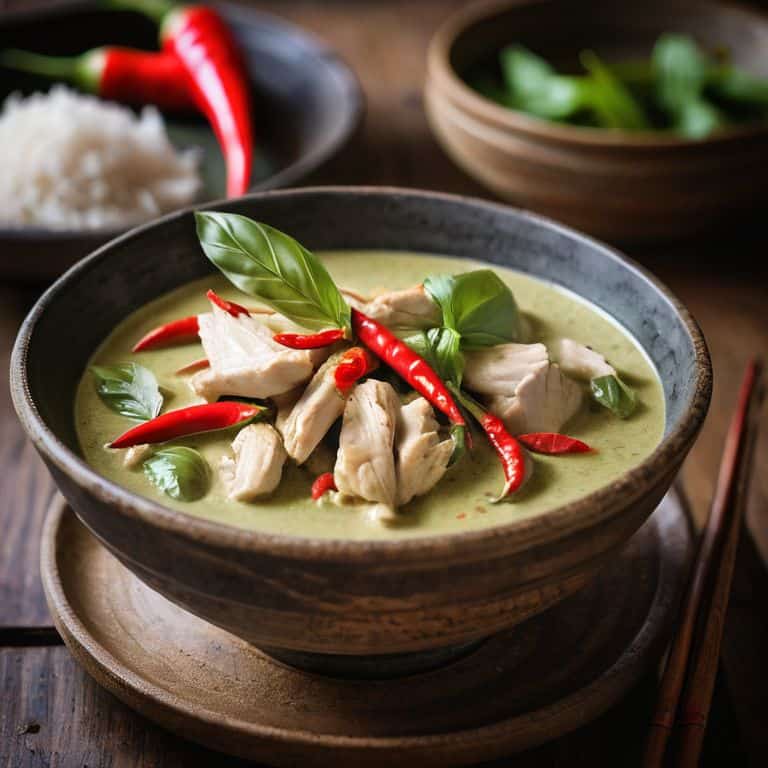
As I delved deeper into the world of coconut milk based curries, I discovered the versatility of Thai cuisine. The key to a rich and creamy curry lies in the balance of flavors, which can be achieved by using high-quality ingredients and careful preparation. For instance, when making green curry with chicken, it’s essential to cook the chicken until it’s tender and then add it to the curry sauce, allowing the flavors to meld together.
One of the most fascinating aspects of Thai cuisine is the use of thai basil recipes to add a unique and aromatic flavor to dishes. In the case of green curry, a sprinkle of fresh thai basil can elevate the entire dish, adding a bright and refreshing note to the rich and spicy sauce. For those looking for vegan thai curry options, substituting chicken with tofu or tempeh can be a great alternative, and the use of homemade curry paste recipe can add an extra layer of depth to the dish.
When it comes to serving green curry, the possibilities are endless. It can be served with steamed rice, noodles, or even as a spicy curry sauce for noodles. The key is to experiment and find the perfect combination that suits your taste. By doing so, you’ll unlock the full potential of this versatile dish and discover a world of flavors that will leave you wanting more.
Crafting Homemade Curry Paste Recipe
As I delved into the world of Thai Green Curry, I discovered that the true magic lies in the homemade curry paste. The aroma of freshly toasted cumin and coriander seeds, blended with the pungency of lemongrass and galangal, is nothing short of enchanting. I recall my nonna’s words, “The key to a great dish is in the layers of flavor,” and I couldn’t agree more. Crafting my own curry paste from scratch has become an obsession, with each batch a testament to the beauty of experimentation.
With every grind of the mortar and pestle, the essence of Thailand’s culinary heritage comes alive. I add a pinch of this, a dash of that, and the room is filled with the intoxicating scent of a Bangkok street food stall. The process is meditative, almost therapeutic, as I combine the ingredients in a delicate dance of flavors and textures. The result is a paste that’s both deeply personal and authentically Thai, a true reflection of my love for this beloved dish.
Deciphering Coconut Milk Based Curries
As I delved deeper into the world of Thai Green Curry, I found myself enchanted by the rich, velvety texture of coconut milk-based curries. The way it effortlessly balances the spiciness of the chilies and the brightness of the lemongrass is truly a marvel. I recall my nonna’s kitchen, where she would often use coconut milk to add depth to her seafood stews, and I realized that this versatile ingredient is a common thread between the cuisines of Italy and Thailand.
In deciphering the secrets of coconut milk-based curries, I discovered that the key lies in the ratio of coconut milk to other ingredients. A delicate balance of flavors and textures is essential to creating a dish that is both creamy and refined. By experimenting with different ratios and techniques, I’ve developed a profound appreciation for the art of crafting coconut milk-based curries that are at once authentic and innovative.
Whispers from the Wok: 5 Timeless Tips for Mastering Thai Green Curry
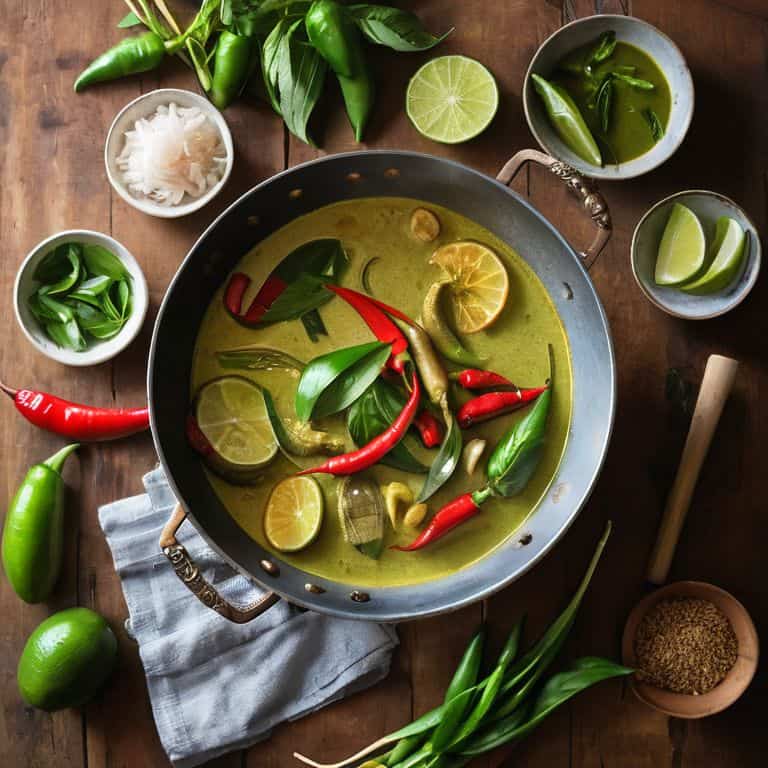
- Let the Aromas Unfold: Allow your homemade curry paste to rest for at least 30 minutes before blending it into your curry, enabling the flavors to meld together like the stories of my nonna’s kitchen
- Coconut Milk: The Velvet Touch: Use full-fat coconut milk for an indulgent, creamy curry, but don’t forget to stir occasionally to prevent scorching, just as I learned from watching the chefs in Bangkok’s bustling streets
- The Harmony of Heat: Balance the spiciness of your curry by adjusting the amount of green chilies, remembering that the goal is to tease the senses, not overwhelm them, a delicate dance I’ve perfected over years of experimenting with my nonna’s recipes
- Freshness is Key: Choose the freshest lemongrass, galangal, and Thai basil you can find, as their vibrant flavors are the backbone of an authentic Thai Green Curry, a lesson I learned on my culinary journeys through the markets of Thailand
- Simmering Stories: Don’t rush the cooking process; let your curry simmer slowly, allowing the flavors to intertwine and the sauce to thicken, much like the way stories of tradition and love are passed down through generations in my family’s kitchen
Savoring the Flavors of Tradition: 3 Key Takeaways
As I reflect on my journey through the aromatic realm of Thai Green Curry, I’m reminded that the heart of this dish lies not just in its ingredients, but in the stories and traditions that unfold with each spoonful, much like the tales my nonna used to share in her cozy kitchen
Deciphering the nuances of coconut milk-based curries, I’ve come to realize that the delicate balance of creamy richness and spicy warmth is a testament to the culinary ingenuity of Thai cuisine, where every element, from the freshness of lemongrass to the depth of galangal, plays a vital role in the harmony of flavors
By crafting our own homemade curry paste, we not only unlock the full potential of Thai Green Curry’s emerald secrets but also pay homage to the generations of cooks who have passed down their recipes and techniques, ensuring that the essence of this beloved dish remains vibrant and alive, a true celebration of culinary heritage and community
A Flavorful Reflection
Thai Green Curry is more than just a dish, it’s a symphony of flavors and aromas that transports me back to the bustling streets of Bangkok, where the harmony of coconut and lemongrass reminds me of my nonna’s loving touch in the kitchen, a testament to the universal language of food that weaves cultures together, one delicious thread at a time.
Marco Bianchi
Savoring the Flavors of Tradition
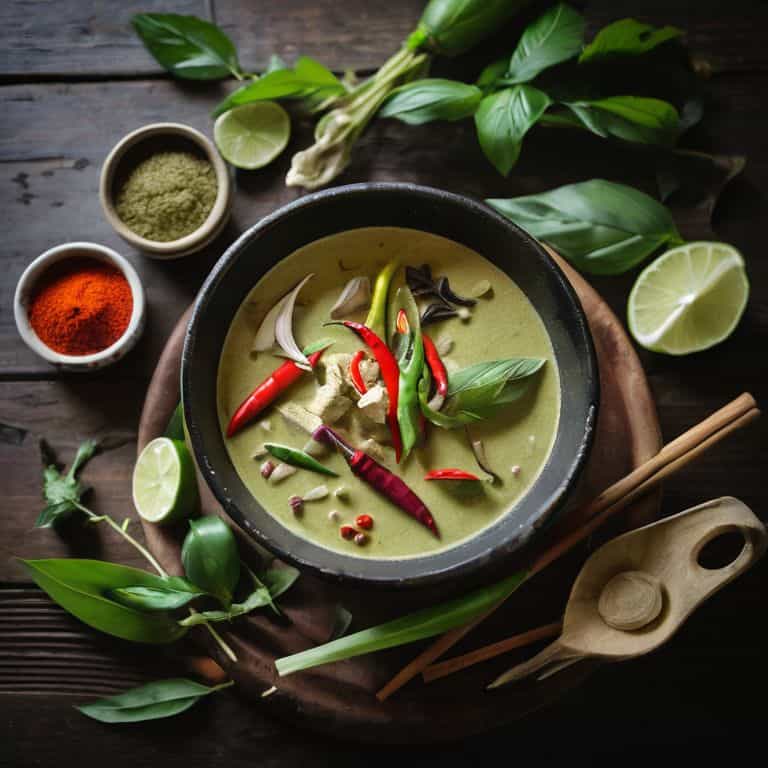
As I conclude my journey through the aromatic realm of Thai Green Curry, I am reminded of the intricate dance between tradition and innovation that defines this beloved dish. From the _subtle nuances_ of coconut milk-based curries to the bold flavors of homemade curry paste, each component plays a vital role in the overall harmony of the recipe. By unveiling the secrets of Thai Green Curry, I hope to have inspired you to embark on your own culinary adventures, exploring the rich tapestry of global traditions that weave our lives together.
As you sit down to savor your own steaming bowl of Thai Green Curry, I encourage you to remember the _storytellers_ and _tradition-keepers_ who have passed down their knowledge and love through generations. Let the flavors of the past transport you to a world of wonder and discovery, where the simple act of sharing a meal becomes a profound celebration of our shared humanity. In the end, it is not just a recipe that we inherit, but a legacy of love, community, and the unbreakable bonds that unite us all.
Frequently Asked Questions
What are some common mistakes to avoid when making Thai Green Curry to ensure an authentic flavor?
To unlock authentic Thai Green Curry flavors, beware of common missteps like over-reducing coconut milk, which can lead to an unbalanced richness, and under-toasting spices, resulting in a dull paste. Also, avoid using low-quality fish sauce or neglecting the crucial step of blooming the curry paste in oil, as these mistakes can significantly alter the dish’s depth and aroma.
Can I substitute or omit any ingredients in the traditional Thai Green Curry recipe without compromising its character?
While tradition is sacred, I say, ‘La vita è bella, and so is flexibility!’ You can omit the fish sauce for a vegan version or substitute the Thai basil with sweet basil, but beware, my friend, the essence of Thai Green Curry lies in its harmony of flavors, so tread gently when altering the recipe.
How does the type and brand of coconut milk used affect the richness and consistency of Thai Green Curry?
The coconut milk conundrum! I’ve found that full-fat coconut milks, like those from Chaokoh or Mae Ploy, add a luxurious richness to Thai Green Curry, while lower-fat versions can result in a slightly thinner consistency. Experimenting with different brands and types will help you find your perfect balance of creaminess and flavor.